
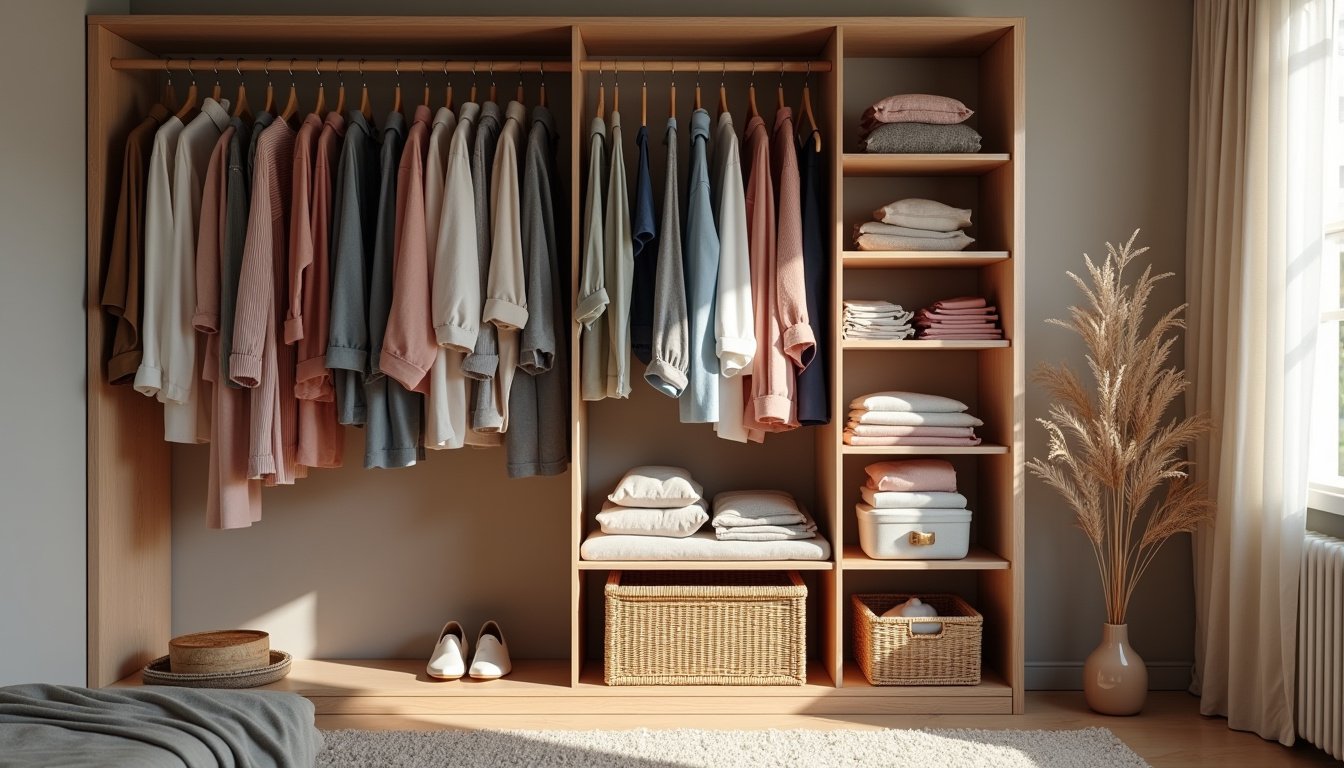
🔑 Key Takeaways
- You can organise wardrobe no extra money by decluttering first and using items you already own
- Categorising clothes by type and colour makes finding outfits easier in limited spaces
- Creating a capsule wardrobe reduces overwhelm and cuts down the volume of clothes to manage
- Vertical storage and repurposed containers maximise space without spending money
- Consistent maintenance habits keep your organised wardrobe functional long-term
How to Organise Your Wardrobe Without Extra Money When Space Is Limited
I’m going to be direct with you: organising your wardrobe no extra money is completely possible, even if your closet space is tiny. The secret isn’t buying fancy organisers or expensive systems. It’s about working with what you have and making smart decisions about what stays and what goes.
Most people think they need to spend money to get organised. They don’t. I’ve seen people transform chaotic wardrobes using zero rupees, just strategy and effort.
Let me walk you through exactly how to do this yourself.
Step 1: Remove Everything and Declutter First
This is non-negotiable. Take every single piece of clothing out of your wardrobe. Yes, everything. Put it on your bed, on the floor, wherever you have space. This step is where most people fail because they get lazy and skip it.
Now sort everything into categories: shirts, trousers, dresses, jackets, undergarments, and anything else you own. Be ruthless here.
For each piece, ask yourself one question: do I love how I feel when I wear this? If yes, it stays. If no, it goes into a donate pile. If you’re saying “maybe” or “umm” or “I guess”—that piece isn’t working for you.
This single step removes clutter and gives you breathing room in your limited space. You’re not paying anything. You’re just being honest about what actually serves you.
Step 2: Organise Your Wardrobe No Extra Money by Categorising and Colour-Coding
Once you’ve decluttered, put things back strategically. This is where limited space becomes your advantage, not your problem.
Hang your trousers in the lower hanging spaces, starting with dark colours, moving to light, then coloured jeans. Follow with dress trousers. This takes advantage of vertical space you already have.
Hang your tops by colour, then sort by type within each colour. So all your white tops together, sorted by t-shirts, shirts, then knitwear. This system means you find what you need in seconds.
For items that don’t hang well—socks, scarves, belts, undergarments—use containers you already own. Old boxes, jars, bowls, tins. Anything with compartments works. This costs you nothing and keeps small items visible and accessible.
Storage Solutions Using What You Already Have
Here’s where most people waste money: they buy expensive organisers when they have perfectly good containers at home.
Look around your house. You probably have:
- Old cardboard boxes from deliveries
- Containers from food packaging
- Baskets you’re not using
- Drawers with spare space
- Shelving you haven’t optimised
Use these. Tin foil boxes make excellent drawer dividers. Old jars hold jewellery and small accessories. Cardboard boxes can be labelled and stacked. You’re creating compartments without spending a single rupee.
If you have adjustable shelving, use it. Adjust heights to match what you’re storing. Don’t waste vertical space with shelves that are too far apart.
Create a Capsule Wardrobe to Reduce Volume
I’m telling you this because it changes everything: a capsule wardrobe is the most powerful tool for people with small closets and no budget for organisation systems.
A capsule wardrobe means you own fewer pieces that work together. Instead of 100 items you never wear, you have 30-40 pieces you actually use. This dramatically reduces the volume of clothes you’re trying to fit and organise.
You don’t need to buy anything new. Just look at what you kept after decluttering. Can these pieces mix and match? Do they work together in colour and style? If not, remove more items until they do.
This approach solves two problems at once: you need less space and you need less time to maintain your wardrobe.
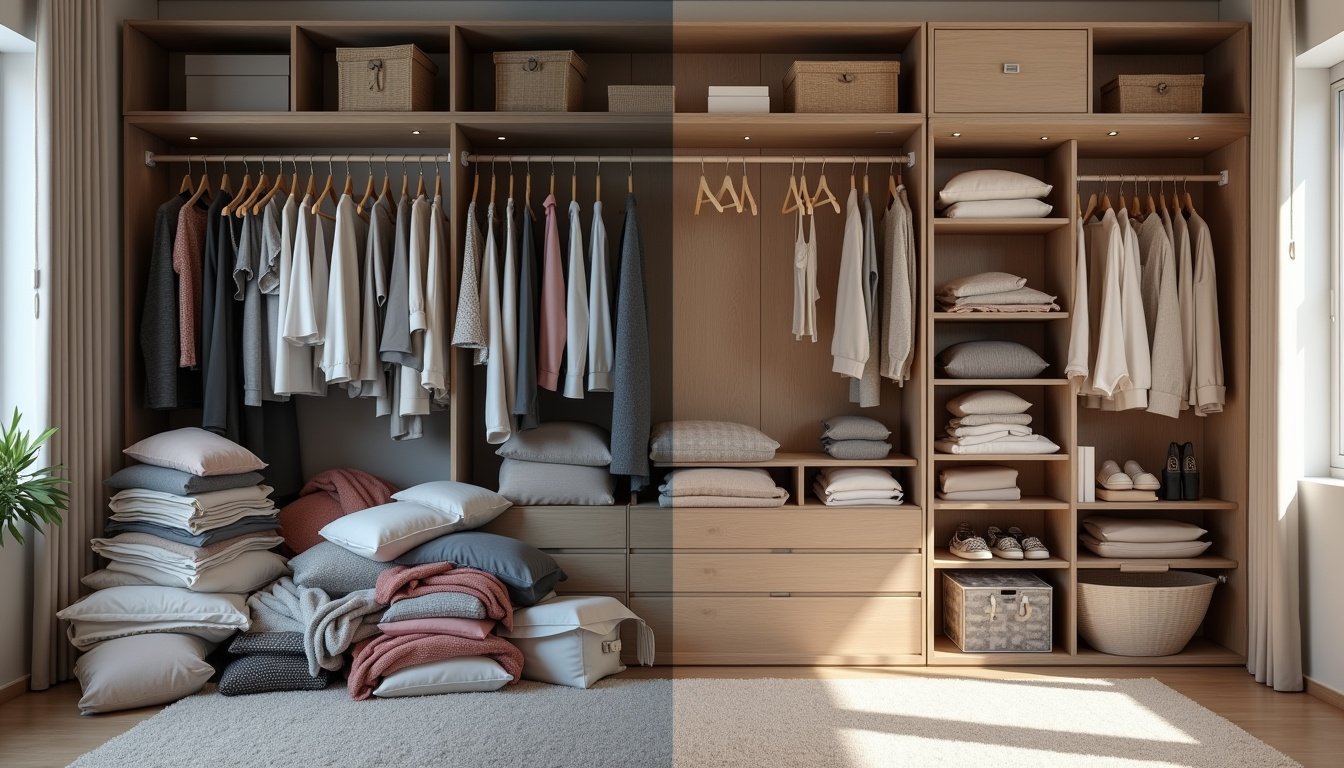
Comparison: Before and After Space Usage
| Aspect | Disorganised Wardrobe | Organised Wardrobe (No Money Spent) |
|---|---|---|
| Number of items | 100-150 pieces | 30-50 pieces |
| Time to find an outfit | 15-20 minutes | 2-3 minutes |
| Hanging space used | Overcrowded, doubled-up hangers | Single hangers, visible items |
| Storage containers bought | ₹2,000-5,000 | ₹0 (using existing items) |
| Items actually worn | 20% of wardrobe | 80-90% of wardrobe |
Maximise Your Limited Space Without Spending
Small closets require smart thinking, not more money. Here’s what actually works:
- Use vertical space aggressively—fold heavy items and stack them on higher shelves
- Hang items that wrinkle easily; fold items that don’t
- Keep seasonal clothing visible year-round so you know what you have
- Use the back of your closet door—hang scarves, belts, or smaller items on hooks or repurposed hangers
- Store matching items together so you don’t forget you own them
The rule is simple: if you can’t see it, you won’t wear it. And if you won’t wear it, it shouldn’t take up your limited space.
Maintain Your System With Zero Extra Effort
Organisation fails when people don’t maintain it. I’m going to give you the maintenance system that costs nothing and takes minimal effort.
Do your laundry consistently and put it away immediately. This is the single biggest habit that keeps wardrobes organised. When clean clothes pile up, organisation falls apart. When you put things away the same day they’re clean, your system stays intact.
Every month, spend 30 minutes reviewing your wardrobe. Remove anything you haven’t worn. If you’re not wearing it, it’s taking up space you don’t have.
Keep a bag or box for items you’re donating. When it’s full, donate them. Don’t let these items sit in your wardrobe taking up space.
Why This Works for Indian Wardrobes Specifically
Indian wardrobes are unique. You might own sarees, kurtas, traditional wear, Western clothes, and occasion-specific pieces all at once. Limited space makes this challenging.
The solution is the same principle: categorise by type (sarees together, kurtas together, trousers together), then by colour within each category. Use the containers you have at home to store smaller items like jewellery, dupatta clips, or accessories.
For sarees and occasion wear, fold them neatly and stack them on higher shelves where they’re visible but not taking up hanging space. Use old fabric scraps or newspaper between folds to prevent creasing.
This approach respects the diversity of Indian wardrobes while working within limited space and zero budget.
The Real Cost of Not Organising
Here’s what happens when you don’t organise: you buy duplicate items because you forget what you own. You spend money replacing items you can’t find. You waste time every morning looking for clothes. You feel stressed and overwhelmed in your own space.
By organising your wardrobe without spending money, you actually save money. You stop buying duplicates. You stop replacing lost items. You wear more of what you own.
I’ve seen this shift people’s entire relationship with their clothes and their space.
Start Today: Your First Action
Don’t wait for the perfect organiser or the perfect system. Start right now with what you have.
Pick one category of clothing—let’s say shirts. Take every shirt out. Declutter ruthlessly. Put back only the ones you love, organised by colour. That’s it. You’ve just organised part of your wardrobe with zero money.
Tomorrow, do another category. By the end of the week, you’ll have a completely organised wardrobe without spending anything.
The system works because it’s simple, it uses what you have, and it respects your space limitations. You don’t need money to organise your wardrobe no extra money—you need strategy and consistency.
Final Thoughts on Organising Your Wardrobe Without Spending
I started by telling you this was possible. Now you know exactly how to do it. No fancy systems. No expensive containers. Just ruthless decluttering, smart categorisation, and using what you already own.
Your limited space isn’t a problem—it’s actually an advantage because it forces you to be intentional about what you keep. Your zero budget isn’t a limitation—it’s a filter that makes you focus on systems instead of stuff.
Start today. Remove everything. Declutter. Categorise. Use containers you have. Maintain consistently. That’s the entire system for how to organise your wardrobe without spending money, even when space is super limited.
Frequently Asked Questions
How long does it take to completely organise a wardrobe using this method?
For most people, 4-6 hours spread over a weekend. The initial decluttering and categorising takes 2-3 hours. Putting everything back takes another 2-3 hours. After that, maintenance takes just 30 minutes per month.
What if I don’t have any spare containers at home?
You almost certainly do—you just haven’t looked. Check your kitchen for old jars, tins, boxes. Check under beds for old bags or baskets. Check your storage for unused containers. Most homes have far more usable containers than people realise.
Should I buy new hangers if mine are old?
Only if they’re broken. Old hangers work fine. The money you save on hangers can go toward something that actually matters. Focus on decluttering first—you might need fewer hangers anyway.
How do I handle seasonal clothing in a small closet?
Keep seasonal clothing visible year-round. This way you know what you have and can rotate it easily. Use higher shelves or the back of your closet for off-season items in containers.
What if I share my wardrobe space with someone else?
Divide the space clearly. Each person gets their own section. Use different coloured containers or labels so it’s obvious which items belong to whom. This prevents mix-ups and makes maintenance easier.
Can I use this system for accessories and jewellery?
Absolutely. Use small containers, jars, or boxes to separate different types. Keep them in a drawer or on a shelf. The principle is the same: categorise, use what you have, and keep everything visible.