Ice cream that is still scoopable on day nine
Most home recipes freeze into a brick because the sugar and fat numbers are wrong, not because your freezer is weak. We run every batch through a 1.5 quart frozen bowl machine and a metal loaf pan, then taste it cold on day one, day four and day nine. The recipes that survive all three get published here, with the fat and sugar percentages printed next to them so you can see why they work.
What makes these recipes different
Weights, not cups
Every recipe lists grams first. A cup of sugar can vary by 30 grams depending on how you scoop it, and 30 grams changes how hard the pint freezes. Cups stay in brackets for anyone without a scale.
Two no machine methods
You do not need a $300 machine. The condensed milk fold and the freeze and stir pan method both make a pint worth serving. We tell you exactly where each one falls short of a churned base.
Failure notes on every recipe
Each recipe ends with what went wrong the first three times we made it. Grainy, icy, greasy, too sweet once it warmed up. You get the fix, not just the finished photo.
Wisconsin dairy, real numbers
Cream here runs about 36 percent fat, and higher at some small dairies. We list the fat percentage we tested with so you can adjust when your cream is richer or thinner than ours.
Start with one of these three
The four ingredient base
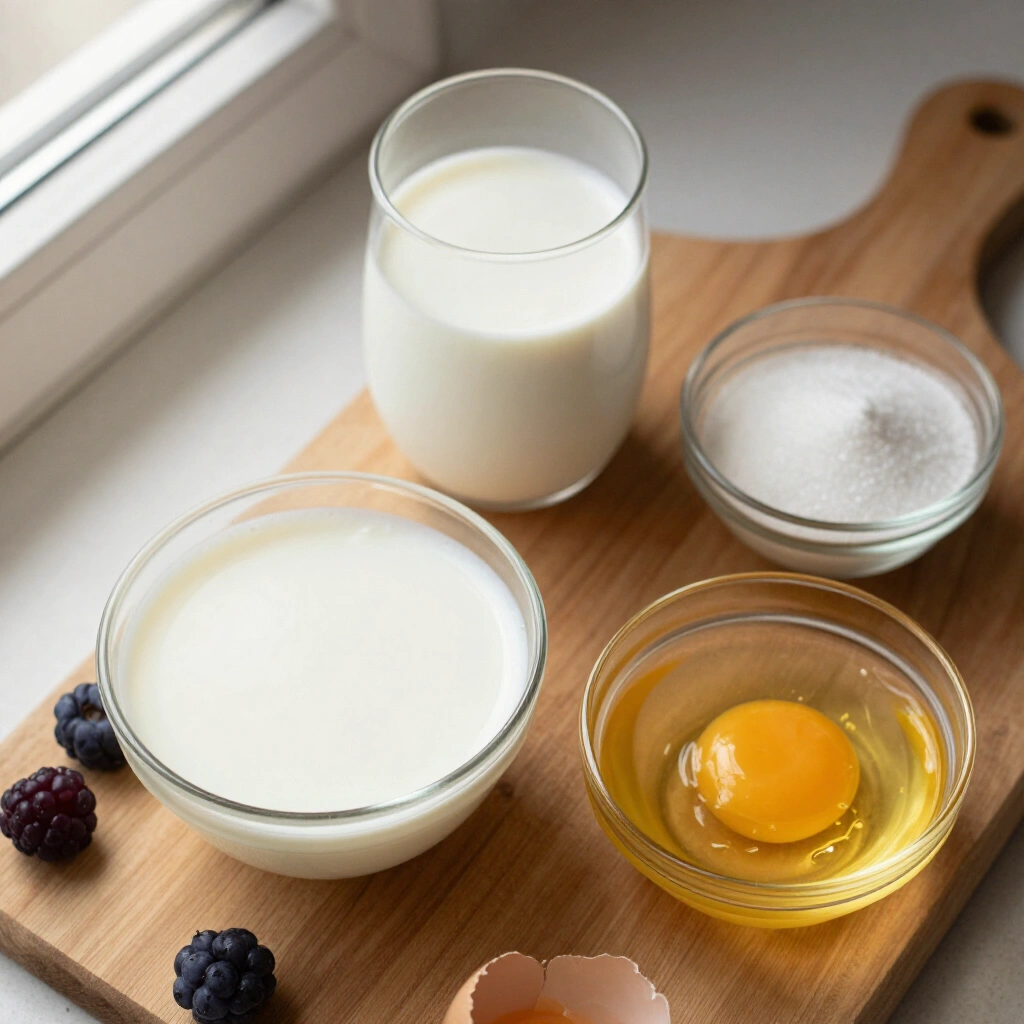
Cream, milk, sugar and salt, with yolks optional. This is the recipe every other flavor gets built on, and the fat and sugar percentages are printed so you can adjust it. Includes the cook temperature that pasteurizes yolks without scrambling them, and the overnight rest that changes texture more than any single ingredient.
Churn, or freeze and stir
A frozen bowl machine, a compressor machine and a metal pan you stir every 30 minutes all make ice cream. They do not make the same ice cream. Here is what each method does to crystal size and air, how long each takes on a July afternoon, and which one we reach for on a weeknight.

Why your last batch turned icy
Nine causes, ranked by how often they show up in our own failed batches. Too little sugar leads the list, followed by a base that went into the machine warm. Each one comes with a test you can run on the pint in your freezer right now and a fix for the next batch.
The base decides everything before the machine turns on
You can spend $400 on a compressor machine and still turn out something that tastes like sweet frost. Texture comes from the base, not the motor. Three numbers decide how a pint behaves after a week in a home freezer: how much fat it carries, how much sugar sits dissolved in the water, and how much of the total weight is solid rather than water. Get those in range and a $60 frozen bowl machine beats an expensive one running a bad recipe.
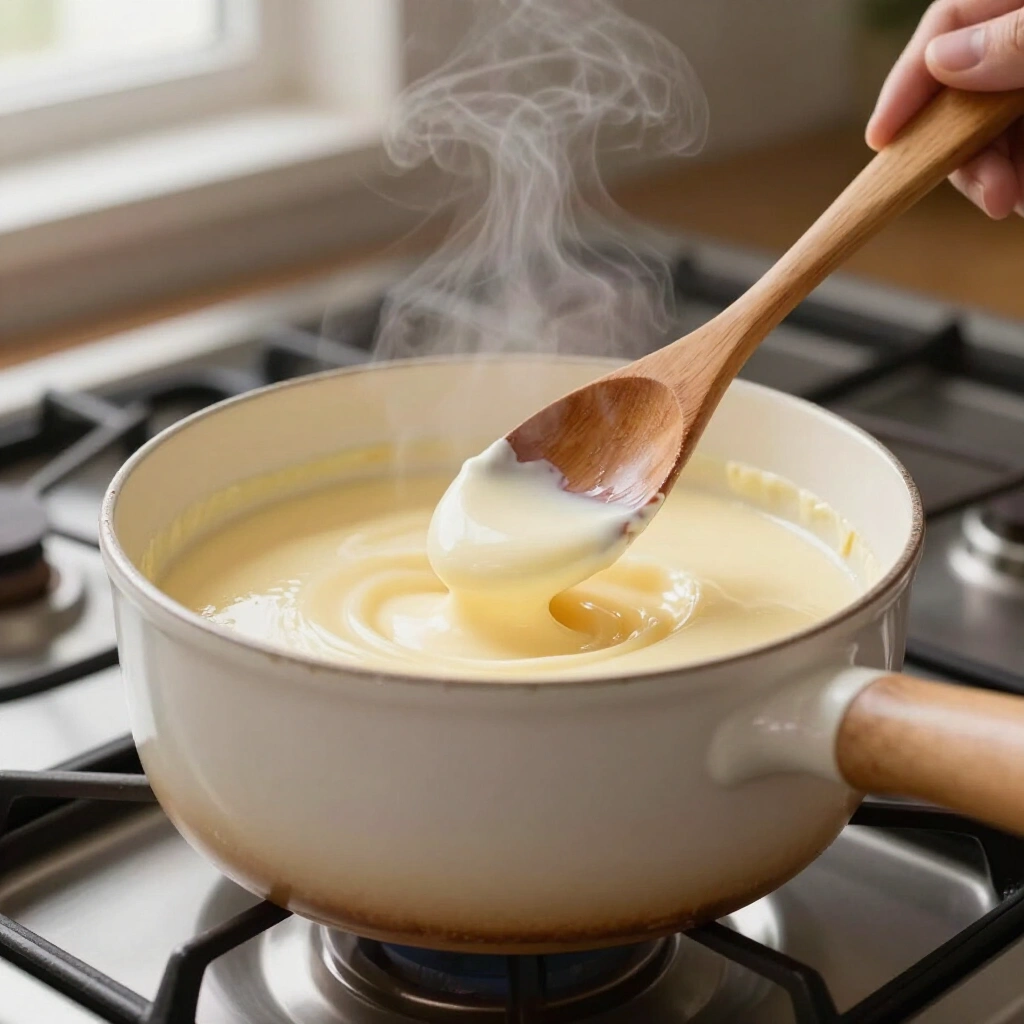
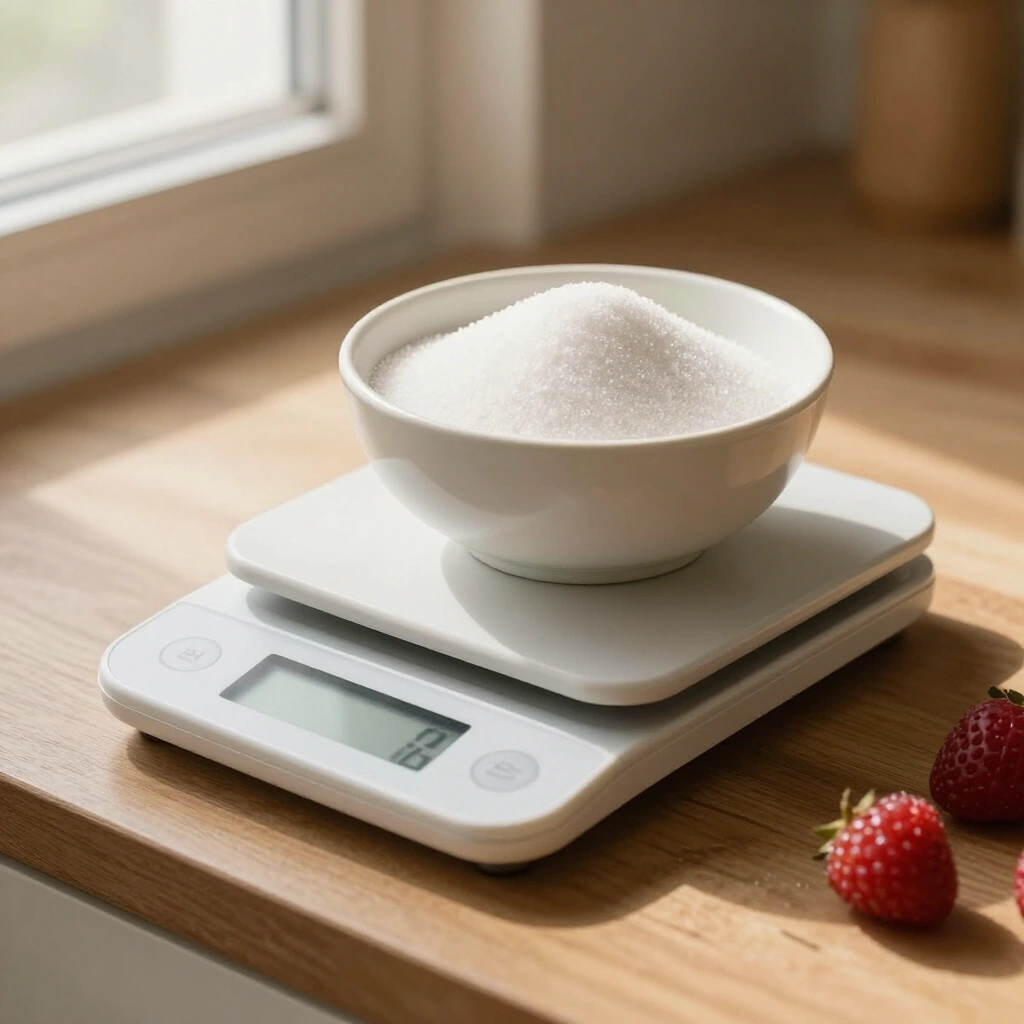
Base number 47, weighed to the gram and chilling before its overnight rest.
Fat sets the texture ceiling
Fat coats your tongue and slows how fast the cold registers. A base at 16 percent fat tastes softer than one at 10 percent at the exact same temperature, even though both are equally frozen. Heavy cream in the US runs about 36 percent fat and whole milk about 3.5 percent, so 480 g of cream against 360 g of milk lands near 22 percent fat before sugar and solids dilute it down toward 17.
Push finished fat past 20 percent and the texture turns waxy. You notice it as a film that stays on the roof of your mouth after the third bite. Drop under 10 percent and you are making ice milk, which can be very good, but it freezes hard and melts fast.
Sugar is antifreeze first, sweetener second
Every gram of sugar you dissolve drops the freezing point of the water around it. That is the whole trick. A base at 16 percent sugar by weight still holds unfrozen liquid at minus 18 C, which is roughly what a home freezer runs at, and that unfrozen liquid is what lets a scoop bend instead of shatter.
Swap 40 g of the white sugar for glucose syrup, honey or invert sugar and the freezing point drops further, because those sugars give you more molecules per gram of sweetness. Two tablespoons of vodka does a similar job with no added sweetness. Go past three tablespoons per quart and the base stays soupy, so you get soft serve at best.
Egg yolks buy you time
Yolks bring lecithin, which holds fat and water together, and protein, which sets into a light gel once you cook the base to 82 C. A custard base with four to five yolks per quart survives a week of freezer door openings better than a plain cream base does.
Yolks also mute bright flavors. Lemon, raspberry and mint all read cleaner with two yolks or none. Cook them properly or leave them out: under 71 C the eggs are not pasteurized, and over 85 C they scramble in a way no amount of straining hides.
Solids are what you are really building
Think of the base as water plus everything that is not water. Fat, sugar, milk protein and lactose are the solids, and together they should reach 36 to 42 percent of total weight. Under 34 percent the batch tastes thin and freezes rocky. Over 45 percent it turns gummy and coats the spoon in a way people describe as fake.
Nonfat dry milk powder is the cheapest way to raise solids without adding fat or sweetness. Start at 30 g per quart of base. Past 60 g you get a chalky finish that sits at the back of the throat.
The base we keep coming back to
480 g heavy cream, 360 g whole milk, 150 g sugar, 40 g nonfat dry milk powder, 4 egg yolks, 3 g salt. That lands near 17 percent fat and 16 percent sugar, with total solids around 40 percent. The dry milk is the part most home recipes skip and it does more work than the yolks do.
Weigh everything. A cup of sugar scooped straight from the bag can weigh 200 g or 230 g depending on how packed it is, and 30 g of sugar moves the freezing point enough to turn a scoopable pint into a chisel job.
Age the base overnight
Chill the cooked base to 4 C, then leave it covered in the fridge for at least four hours and ideally twelve. Fat crystallizes during that rest and the proteins hydrate. We churned the same base at two hours and at fourteen hours last January and served both at the table: the aged pint held its shape for 11 minutes, the unaged one slumped at 6.
One honest caveat. Aging pays off most in custard and high solids bases. If you are making a lean sorbet or a two ingredient no churn with condensed milk, the overnight rest buys you almost nothing and you can churn the same day.
Run the numbers before you churn
Most recipes online never state their fat and sugar percentages, which makes them impossible to compare against each other. Enter your weights below and this returns three numbers: fat as a share of total weight, added sugar as a share of total weight, and total solids. Then it tells you what the pint will feel like on day four.
The target zones come from what works repeatedly in a home freezer at minus 18 C, and they match where premium supermarket pints sit. This is a texture tool and nothing more. It will not catch a base you scorched, and it does not account for a fruit puree that quietly added 200 g of water to your batch.
Change one ingredient at a time and watch which number moves. That is the fastest way to learn what your own freezer wants, and it costs you nothing but a few seconds of typing.
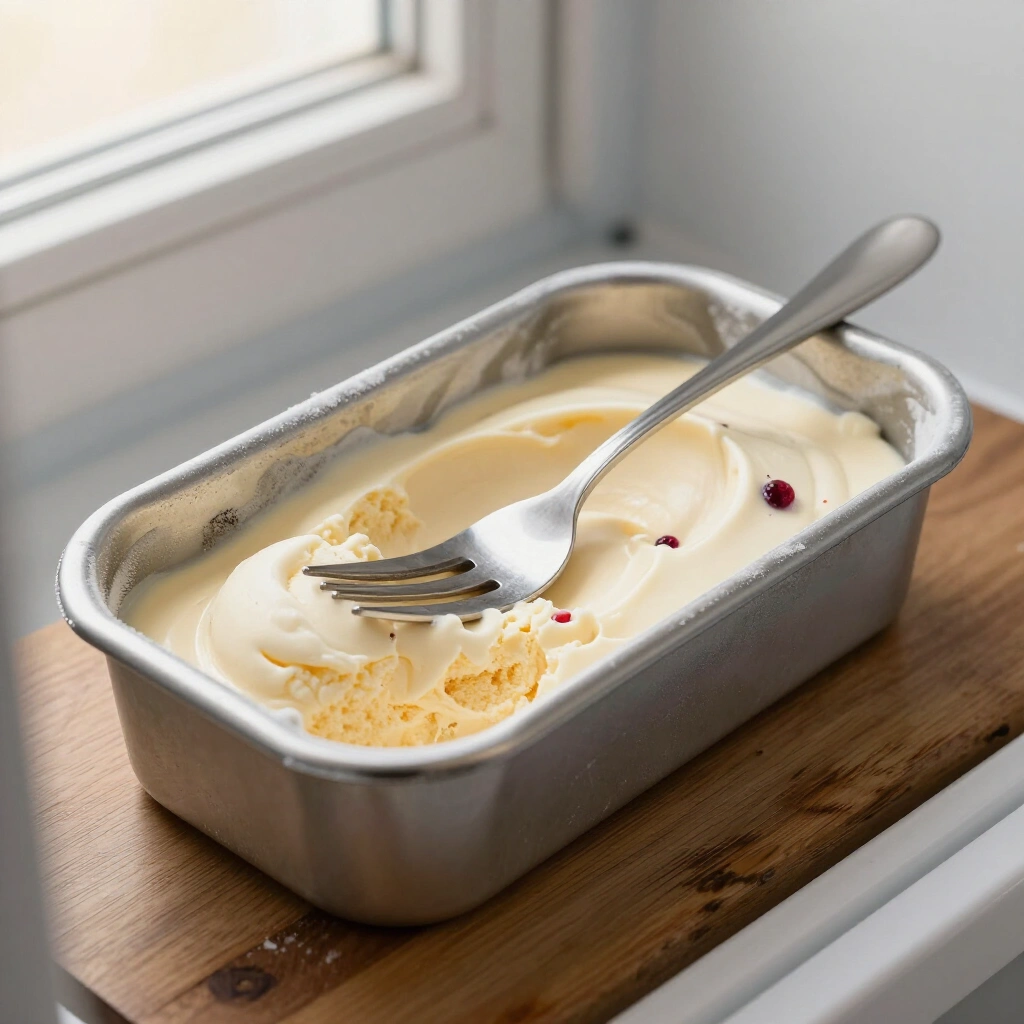
Freeze and stir, hour two. Five passes with a fork is the minimum.
What actually happens inside the machine
Churning does two jobs at once and most home cooks only think about one of them. It freezes water into crystals, and it beats air into the base while those crystals form. Crystal size and air content decide whether a pint reads as ice cream or as a flavoured block. Everything below is about controlling both, and almost none of it needs equipment you do not already own.
Cold in, cold out
Your base should sit at 4 C or colder when it hits the machine. A base at 10 C spends the first eight minutes of churn time simply getting cold, and during those minutes the paddle does nothing useful while large crystals form against the wall. We timed the same recipe twice: from 4 C it hit soft serve in 18 minutes, from 12 C it took 31 and the texture never recovered.
Freeze the machine bowl for 24 hours, not the eight the manual claims. Shake it before you use it. If you hear liquid sloshing inside, it is not ready and your batch will not thicken.
Air is an ingredient, not a side effect
Overrun is the trade word for how much air gets whipped in, counted as percentage of volume gained. Cheap supermarket tubs run 90 to 100 percent overrun, so half of what you carry home is air. Premium pints sit near 25 percent. A home frozen bowl machine delivers roughly 20 to 30 percent, which is why homemade ice cream feels dense and also why it freezes harder than the stuff in the tub.
You can push air higher by running the machine another minute or two after it thickens. There is a ceiling though. Past that point friction melts what you already froze, and a soupy batch refreezes into a solid brick.
Three machines, ranked honestly
A compressor machine at $250 to $400 is the only one that runs back to back batches, and it holds a steadier temperature so crystals stay small. Make ice cream more than twice a month and it earns its place on the counter.
A frozen bowl machine at $60 to $90 does about 85 percent of that job for one batch a day. It is what we use for most testing here, and every recipe on this site was built to work in one.
The stir paddle that clips onto a stand mixer comes last. It is slow, it splashes, and the bowl warms in open kitchen air while it works. You will taste the difference in crystal size, and the paddle struggles once the base passes soft serve.
None of the three will beat a bad base. A compressor machine running a recipe at 11 percent sugar still hands you a brick, it just hands it to you faster.
No machine? Two methods that hold up
Freeze and stir: pour the chilled base into a metal loaf pan, freeze it, and break the crystals apart with a fork every 30 minutes for the first three hours. Five stirs is the minimum. Metal matters because it pulls heat out faster than glass or plastic, and speed is the entire point of the method.
The condensed milk fold: whip 480 g of cold heavy cream to firm peaks, fold in one 397 g can of sweetened condensed milk with your flavouring, freeze six hours. No churning at all. The whipped cream supplies air and the condensed milk supplies enough sugar and solids to block big crystals. It tastes noticeably sweeter than a churned base and there is no way around that.
Hardening counts as its own step
Ice cream leaves any home machine at about minus 6 C, which is soft serve. It needs four hours in the coldest part of the freezer to firm up, and the faster it gets there the smaller the crystals stay.
Spread it in a shallow container rather than a tall one. A 5 cm layer hardens in roughly half the time a 10 cm layer takes, and that difference shows up on the spoon.
Storage, and one caveat worth hearing
Press parchment or plastic wrap flat onto the surface before the lid goes on. Trapped air is what builds those crunchy frost crystals across the top by day three. Keep the tub at the back of the freezer and never in the door.
The caveat: no home freezer holds a steady temperature. Every door opening softens the surface layer slightly and it refreezes into coarser crystals. Even a flawless base degrades. Plan to finish a batch within two weeks and stop chasing week five.
From the kitchen, not from a studio
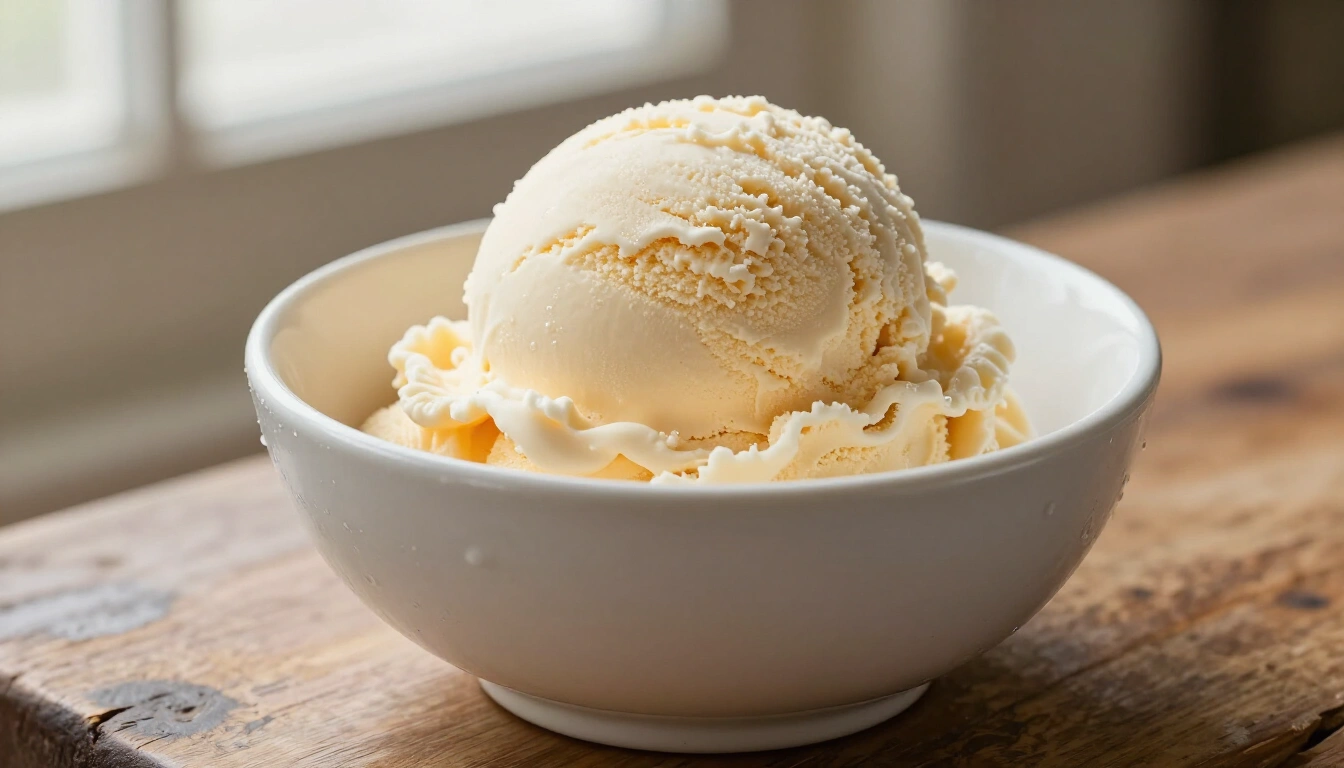
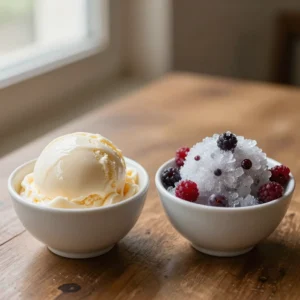
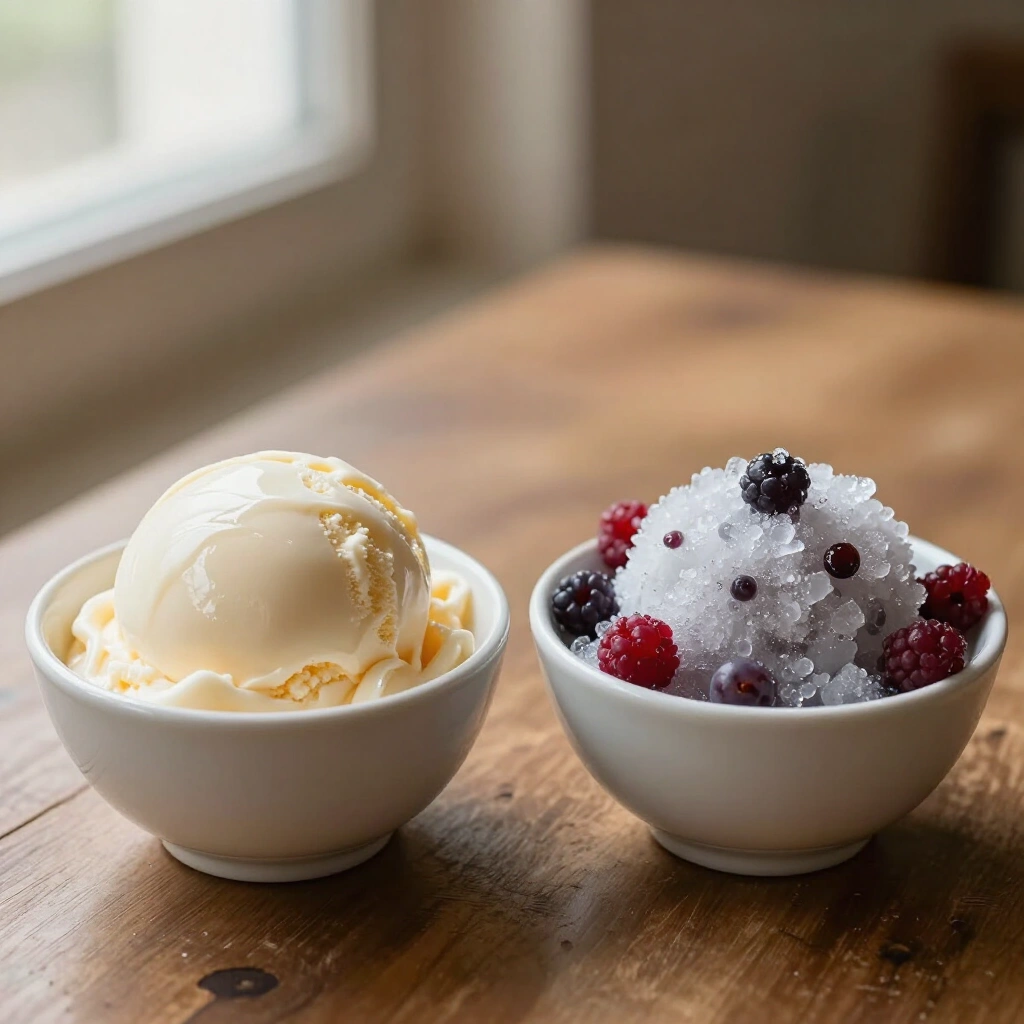
Every photo here came off a batch we actually ate. Nothing was styled with mashed potato or shortening, which is the standard trick in food photography, because a fake scoop hides the one thing worth seeing. Look at the surface. A good batch shows a fine matte grain and a clean edge where the scoop pulled away. An icy batch glitters under the light. Once you know the difference you can judge a pint before you taste it, and you can tell within a day whether the batch is going to last the week.

Flavour is a water problem before it is a taste problem
Flavour in ice cream is a water problem before it is a taste problem. Anything you add brings water, fat or sugar with it, and each of those shifts the numbers you balanced in the base. A raspberry purée is 85 percent water. Melted chocolate is half fat. Drop either into a finished base without adjusting and you get something that tastes right and freezes wrong.
Fruit brings water you did not budget for
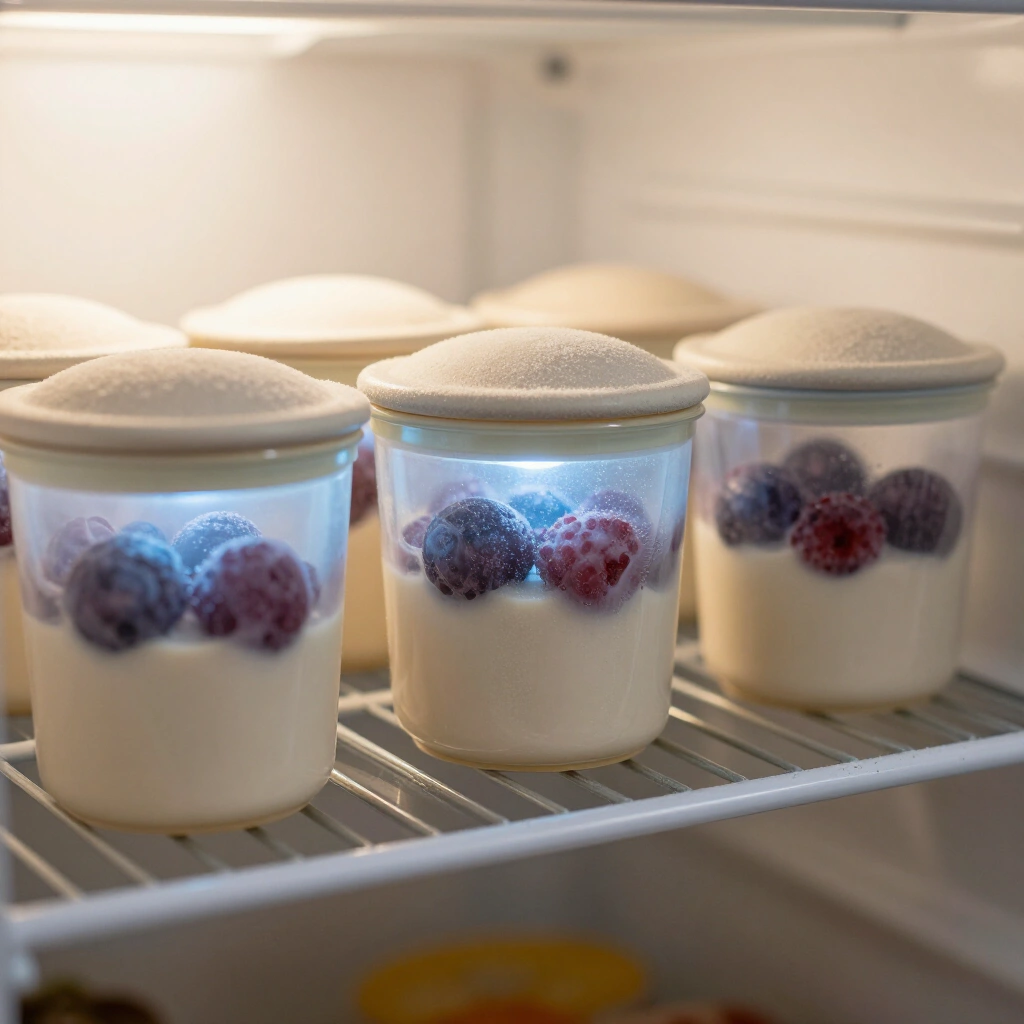
Fresh fruit is mostly water, and water freezes into exactly the crystals you spent the whole base trying to avoid. The fix is to cook the fruit down first. Simmer 400 g of strawberries with 80 g of sugar until the volume drops by about a third, cool it, then fold it into the base. You lose some brightness and gain a pint that scoops.
Macerating instead of cooking also works for softer fruit. Toss the fruit with sugar, wait an hour, then drain the liquid and reduce that liquid alone. Peaches, plums and berries all respond well. Bananas are the exception: they carry so little free water and so much starch that you can blend them straight in.
Citrus is its own case. Juice is acidic enough to curdle a dairy base if you add it warm, so stir it in cold and accept a slightly looser churn.
Chocolate is fat before it is flavour
Dark chocolate at 70 percent is roughly 40 percent cocoa butter. Melt 120 g into a quart of base and you have pushed total fat past 22 percent, which is where the waxy mouthfeel starts. Cocoa powder avoids that entirely: it brings colour and flavour with almost no fat, and it adds solids, which helps.
Our approach is 45 g of cocoa powder bloomed in the hot milk plus 60 g of melted chocolate for depth. Pull 60 g of cream out of the base to make room for the cocoa butter you just added. That single swap is the difference between chocolate ice cream and chocolate grease.
Nuts, pastes and the roasting step
Raw pistachio paste tastes flat and slightly green. Roast the nuts at 160 C for 9 minutes before grinding and the flavour roughly doubles in intensity. The same holds for hazelnuts, almonds and sesame.
Nut pastes carry 50 to 60 percent fat, so treat 100 g of paste as 55 g of added fat and reduce the cream accordingly. Peanut butter is worse for this than most people expect, and commercial jars add stabilisers and sugar that change your numbers again. Grind your own when you can be bothered.
Extracts, infusions and when each one wins
Extracts go in cold, after the base has cooled. Alcohol carries the aroma compounds and heat drives them off, so a vanilla extract added to a simmering base loses a noticeable share of what you paid for.
Infusions go in hot. Mint leaves, coffee beans, tea, toasted rice and cinnamon all give up their flavour into warm dairy over 20 to 30 minutes, then you strain them out. Mint is the clearest example: an infusion of fresh leaves tastes like a plant, while peppermint extract tastes like a candy cane. Both are valid, they are just not the same thing.
Salt and acid are the two dials nobody turns
Three grams of fine salt per quart of base does not make ice cream salty. It makes vanilla taste more like vanilla. Cold dulls the tongue, so a base that tastes correctly seasoned at room temperature will taste flat once frozen. Season the warm base slightly stronger than seems right.
Acid does the same job from the other direction. A teaspoon of lemon juice in a strawberry base, or a spoon of buttermilk in a plain one, lifts everything and stops the fat from reading heavy. Start at half a teaspoon and taste the base cold on a spoon you kept in the freezer, because that is the temperature your guests will meet it at.
Mix-ins go in during the last 30 seconds
Add chunks while the machine is still running but only at the very end, once the base has thickened to soft serve. Earlier than that and the paddle grinds them into dust that muddies the colour.
Chill the mix-ins first. Room temperature cookie pieces melt a channel through the base as they equalise, and those channels refreeze as ice. Chocolate chips are the classic disappointment here: solid chocolate goes hard and flavourless at minus 18 C. Use a thin chocolate shell cracked into shards instead, made with 100 g chocolate and 15 g coconut oil.
The caveat worth stating plainly: every mix-in makes the pint harder to scoop, because none of them carry sugar in solution the way your base does. Budget for that and pull the base sugar up by 10 g if you are adding a lot.
Watch the base thicken before you trust the clock
Timing a churn by the minute is guesswork, because room temperature, bowl temperature and batch size all move the number. Watch the base instead. It goes from liquid to a thin custard that coats the paddle, then to soft serve that holds a ridge for two seconds before it settles. That ridge is your signal to stop, and it usually lands somewhere between 16 and 24 minutes in a frozen bowl machine.
Stop early and the base never holds enough air, so the pint freezes dense and hard. Run past the ridge and friction melts crystals you already made, and what refreezes in the tub is coarse and grainy. The window between those two mistakes is about three minutes wide, which is why the visual cue beats the timer every time.
Nine reasons your ice cream turned icy, ranked
Icy is the failure everyone hits, and it has nine causes worth knowing. They are ranked below by how often they showed up across our own failed batches, not by how dramatic they sound. Each one has a test you can run on the pint sitting in your freezer right now and a fix for the next batch. Work down the list in order and you will almost always find yours in the first three.
1. Not enough sugar
The most common cause by a wide margin. Test: does the pint soften into something scoopable after 12 minutes on the counter and taste correctly sweet? Then sugar is low, not fat. Fix: raise added sugar to 15 to 18 percent of total base weight, or swap 40 g of the white sugar for glucose syrup, which lowers the freezing point further without tasting sweeter.
2. The base went in warm
Test: did the machine take longer than 25 minutes to thicken? Fix: chill the base to 4 C and check it with a thermometer rather than trusting the fridge. An ice bath drops a cooked base from 80 C to 10 C in about 15 minutes, which also carries it quickly through the temperature range where bacteria multiply fastest. Then give it the overnight rest in the fridge before churning.
3. The bowl was not frozen through
Test: shake the bowl before use. Any sloshing means liquid coolant is still liquid. Fix: 24 hours at the back of the freezer, and keep it stored there permanently so it is always ready. A bowl pulled from a freezer that sat open during a grocery unload is not cold enough either. Give it another six hours and start over rather than pouring a base into a warm bowl.
4. Total solids are too low
Test: does it taste thin and watery rather than just hard? Fix: add 30 to 40 g of nonfat dry milk powder per quart of base. This is the single cheapest upgrade to a home recipe and the one most published recipes leave out entirely. Whisk the powder into the cold milk before heating so it dissolves instead of clumping, and stop at 60 g before the finish turns chalky.
5. You churned it too long
Test: did the batch look thick, then go soupy again while the machine ran? Fix: stop at the point where the base holds a ridge for two seconds. Friction from the paddle melts crystals that already formed, and what refreezes in the tub is coarse. Ten minutes of overrun is worth less than the texture you give up chasing it.
6. Fruit added raw water
Test: are the icy patches concentrated where the fruit sits? Fix: cook the fruit down by a third with sugar before folding it in, or macerate it and reduce the drained liquid separately. Frozen fruit thawed straight into a base is the worst version of this, because freezing has already ruptured the cell walls and every bit of that water is now free to move.
7. It hardened too slowly
Test: was the container tall and narrow? Fix: spread the fresh churn into a shallow container no deeper than 5 cm and push it to the coldest shelf. Slow hardening gives crystals hours to grow, and they grow into each other. Metal containers beat plastic here for the same reason a metal loaf pan beats a glass dish.
8. Air in the storage container
Test: is the crunch only on the top layer while the middle scoops fine? That is frost, not a base problem. Fix: press parchment or plastic wrap flat onto the surface before the lid goes on, and fill containers close to the top so there is less air to work with. A tub that is half eaten needs the parchment pressed back down every time.
9. The freezer door
Test: is your ice cream stored in the door, or does the freezer sit somewhere it gets opened twenty times a day? Fix: back shelf, always. Every warm draught softens the surface and refreezes it coarser, and no recipe survives that treatment indefinitely. Two weeks is a realistic shelf life in a home freezer, and a batch made with fresh dairy and no stabilisers is at its best inside the first five days. If yours is still good at week four, you probably bought it.
Ten questions, answered without hedging
Do I actually need an ice cream machine?
No, but a machine gives you a better result with less work. A $60 frozen bowl model produces a noticeably finer texture than any hand method because it freezes and aerates at the same time. Without one, use the freeze and stir pan method or the condensed milk fold. Both make ice cream worth serving, and both are covered above with their honest limits. The pan method costs you attention rather than money, since it needs five visits to the freezer across three hours.
Why does my homemade ice cream freeze rock hard?
Almost always sugar. Sugar lowers the freezing point of the water in your base, and under about 13 percent by weight there is not enough unfrozen liquid left at minus 18 C for a scoop to bend. Raise added sugar to 15 to 18 percent, or swap 40 g of it for glucose syrup. Low total solids and slow hardening are the next two causes to check.
Can I use half and half instead of heavy cream?
You can, and the result will be closer to ice milk. Half and half runs about 12 percent fat against 36 for heavy cream, so a base built on it lands near 8 percent fat. It will taste lean, melt fast and freeze harder. If you want a lighter pint on purpose, add 20 g more milk powder and 20 g more sugar to compensate for what the fat was doing.
Do I have to cook the base if it has egg yolks?
Yes. Raw yolks are a real food safety risk and they also do not thicken. Cook the base to 82 C, holding it there briefly, then strain and chill it. Under 71 C the eggs are not pasteurized. Over 85 C they scramble, and no amount of straining fixes the grainy edge that leaves behind. A thermometer removes all the guesswork here, and a $12 instant read model is accurate enough for the job.
How long does homemade ice cream actually last?
Two weeks is a realistic limit, and the first five days are the best of it. There are no commercial stabilizers holding your batch together, so every freezer door opening softens the surface slightly and refreezes it into coarser crystals. Press wrap onto the surface, store it at the back of the freezer, and stop expecting week four to taste like week one.
Can I make it with a sugar substitute?
Partly. Erythritol and allulose both work, but they do not lower the freezing point the same way sucrose does, so texture suffers. Allulose is the closest match and behaves reasonably at 18 percent by weight. Erythritol tends to recrystallize and reads gritty. Expect a firmer pint either way, and plan on 15 minutes of counter time before serving.
What is the best container to store it in?
A shallow one, ideally metal, no deeper than 5 cm. Metal pulls heat out faster than glass or plastic, and a shallow layer hardens in about half the time a deep one takes, which keeps crystals small. Fill it close to the top so there is less trapped air, and press parchment flat onto the surface before the lid goes on.
Why does my custard base taste eggy?
Either too many yolks or too much heat. Four to five yolks per quart is plenty, and past six the flavour turns distinctly of egg rather than of custard. Overheating also drives it, because scrambled protein smells eggy in a way a properly cooked base does not. Straining catches the lumps but it does not remove the aroma. Drop to two yolks and add 20 g of milk powder if you want body without the egg character, which is what we do for lemon and mint.
Can I double the recipe?
Double the base, but churn it in two batches. Home machines are sized for about a quart, and overfilling means the paddle cannot move the mixture properly, so it freezes at the wall and stays liquid in the middle. The base itself keeps in the fridge for three days, so cook once on Friday and churn twice across the weekend. Aging it that extra day tends to improve the second pint.
Is nonfat dry milk powder really necessary?
Not necessary, but it is the cheapest upgrade available to a home recipe. It raises total solids without adding fat or sweetness, which binds free water and keeps ice crystals small. Start at 30 g per quart of base. Past 60 g you get a chalky finish at the back of the throat, so more is not better here.
Start with the base. Everything else is a variation.
Weigh six ingredients, rest the base overnight, churn it cold. That is the whole method. Run your numbers through the calculator first and you will know before you start whether the pint is going to scoop, or whether you are about to spend Sunday chipping at a brick.
We have run 61 test batches out of a home kitchen in Hortonville, Wisconsin since 2023, weighing every ingredient and tasting each batch cold on day one, day four and day nine. Nothing here is sponsored and nothing is written from a press release. When a recipe fails we publish the failure, and the troubleshooting list above came from batches we threw out.
Recipes tested by weight in Hortonville, Wisconsin. Every batch is tasted on day one, day four and day nine before it goes on the site.